- Large 2677 amino acids
- Coiled-coil domain composed of helices
- Involved in DNA ds-break response
- Found in cytoplasm and nucleoplasm
- Binds nucleotides and ATP
- UvrD Helicase domain at C-term http://www.ncbi.nlm.nih.gov/Structure/cdd/cddsrv.cgi?uid=127317
- Phosphoprotein (PTM -- post translational modification)
- No PDB structures yet
- Paralogs of UPF1 and IGHMBP2 proteins
- Homologs of yeast SEN1P, chimps, mouse SETX
- OMIM ( disease, Online Mendelian Inheritance in Men) -- ALS4 and AOA2 -- neurodegenerative disease that causes poor coordination with hands, eyes, limbs, speech.
- http://www.uniprot.org/uniprot/Q7Z333#section_comments
NP_055861 , Q7Z333
- http://www.genecards.org/cgi-bin/carddisp.pl?gene=Setx
- 1-Litre of Tears
- 3 isoforms
Friday, January 30, 2009
Senataxin -- SETX

Thursday, January 29, 2009
〜始める (〜はじめる) (〜hajimeru)
Meaning: to begin/start VERB-ing
Example: I started reading yesterday.本を読み始めた [ex #1180]
I started reading the book.
Wednesday, January 28, 2009
Keynote with Jeffrey Veen - HighEdWeb 2008 Conference
http://ca.youtube.com/watch?v=AcZQSGxnP-Y
- Find a story in the data (using GoogleAnalytics for eg)
- Assign visual cues to each dimension of the data
- Remove everything that isn't telling a story
- Release control when publishing on the web (see CSS Zen Garden) --> interactivity
- Let users discover their own story, develop tools that lets user control their data
- Provide filters to enable clarity
- A word from entrepreneurs, "Everything I've built has come from the frustration that it didn't yet exist "
- New ideas come from your heart, not from your wallet
- When you start looking at a problem and it seems really simple with all these simple solutions, you don't really understand the complexity of the problem. And your solutions are way too over simplified, and they don't work. ... Then you get into the problem, and you see it's really complicated. And you come up with all these solutions. That's sort of the middle and most people stop, and the solutions tend to work for a while ... But the really great person will keep on going and find the key and underlying principle of the problem, and come up with a beautiful and elegant solution that works. -- Steve Jobs
- Find inspiration from the fossils and the users
Turns and loops

Turns
- serve to change the direction of the polypeptide chain, so if chain is going north, then a U-turn will change direction to south
- involves 4 residues, h-bond between carbonyl of residue i and amide of residue i+3
- type I is the most common
- turns are mostly found in the surface, so residues are usually charged and polar
- type I' and II' are mirror image conformations and are rare because of steric hindrance

Loops
- longer than turns, between 6 and 16 residues long
- term used to describe 2 stranded beta-sheet
- beta-hairpin (loop) like turns, generally polar, flexible and are often found in active sites, bin
Secondary structure - Beta sheets

- carbonyls alternate in direction
- side-chains alternate in direction (pleated, doubling the layers because CA alternates up and down the sheet)
- zig-zag
- phi: -135, psi: +135 (top-left or Rama plot)
- pitch: 7A tall, 2 residues per turn, 3.5A rise between residues


- beta strands together form beta sheets via H-bonding between main-chain backbone carbonyls and amides
- vs. alpha helices, beta-sheets have H-bonds with different segments of peptide, 0.1A H-bond shorter, both are amphipathic
- left-hand twisted in terms of angle between strand crossings
- uninvolved strands on the edges can wrap around and be involved in H-bond with the
other strand to form barrels
- Greek Key Motif (3214 or 4123 topology) (number in the order of translation, ie N-term is 1 and the C-term is the last number)

- anti-parallel - strongest, H-bond perfectly 180 degrees horizontal, dipoles cancel with other strand, more solvent accessible, some bifuricate forming beta-bulge
- parallel - weaker, H-bond in an angle, dipole aligns with other strand, producing a net dipole on one side = unstable, usually burried, less twisted
- mixed - mixture of parallel and anti-parallel strands

Connection Types
- hairpin - When the backbone enters the same end of the sheet that it left.
- right-handed crossover - When the backbone enters the opposite end.
Socrates' Way: Seven Master Keys to Using Your Mind to the Utmost
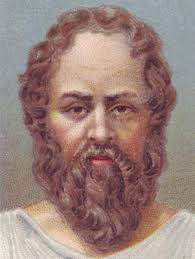
- Know thyself
- Ask great questions
- Think for yourself
- Challenge convention
- Grow with friends
- Speak the truth
- Strengthen your soul
〜が (ga) (subject marker)
# バスが来るよ。 [basu gakuru yo.] [ex #670]
The bus * is coming!
# 台所にテレビがあります 。[daidokoro ni terebi ga arimasu ] [ex #674]
There is a television * in the kitchen.
# 熟 [つくづく]
(adj-na,adv) (uk) completely; really; thoroughly; deeply; severely; intently [K] [D]
# 円熟 [えんじゅく]
(n,vs) ripeness; mellowness; maturity; perfection [K] [D]
酒
sake
# 酸 [さん]
(n) acid [K] [D]
The bus * is coming!
# 台所にテレビがあります 。[daidokoro ni terebi ga arimasu ] [ex #674]
There is a television * in the kitchen.
# 熟 [つくづく]
(adj-na,adv) (uk) completely; really; thoroughly; deeply; severely; intently [K] [D]
# 円熟 [えんじゅく]
(n,vs) ripeness; mellowness; maturity; perfection [K] [D]
酒
sake
# 酸 [さん]
(n) acid [K] [D]
Monday, January 26, 2009
Non-covalent interactions
* C-C covalent bond requires 83 kcal/mol (~360 kJ/mol) to break
* 1 kcal/mol ~ 4 kJ/mol
* H-bond (O-H....N) is about 7 kcal/mol
* bond length is from H-donor to H-acceptor
* London forces, a special type of van der Waals attraction, is when two aromatics are on top of each other, induced dipoles
* charge-charge (electrostatic) strongest IN VACUUM F=kq1q2/r^2*e (Coulomb's Law) e = dielectric, in H2O, e ~ 80, interior of protein e ~ 2 (almost vacuum)
* dipole(mu) (permanent and induced), diff. in electronegativity, Molecules with no netchargebut with asymmetric distribution of charge (e.g. CO or H2O) –Polar (permanent dipole),
* peptide bond has dipole, eg H2O, vector toward q+, mu = qx q=charge, x=distance
* van der Waals (short range than charge-charge), very weak but plays important role in stability
* van der Waals (vdw) radii rv=R1+R2 H(1.2A), **C(1.7), N(1.5), O(1.4) (radii decrease because # protons increase but # orbitals stay the same)
 * Lennard-Jones potential, e=(1/r)^12-(1/r)^6 balance between vdw attractions (1/r)^6 and repulsions (1/r)^12 http://en.wikipedia.org/wiki/Lennard-Jones_potential
* hydrogen bonds, between H-bond donor (O or N) and H-bond acceptor (O or N), strong and specific non-convalent interaction, 2.6-3.5A H-bond length, 180 degrees, straight H-bond is strongest, found in secondary structure, alpha-helices, at 2.55A, the h-bond is very strong and there's a low barrier hydrogen bond (LBHB)
 * water, unique because of H-bonds, sphere of hydration enables salt to dissolve, water can steal hydrogen bonds from alpha-helices, breaking it
* hydrophobic interaction - lipids aggregate because it takes less energy to form a single cage than 2 separate water cages

Summary
* hydrophobic effect and van der Waal's forces
** weakest
** for stability of folded protein
** non-specific (doesn't matter what orientation is the water cage, as long as it helps minimize energy)
vs
* hydrogen bonding and electrostatic (charge-charge)
** strongest
** for single folded state formation, NOT stability of folded state
** highly specific
* 1 kcal/mol ~ 4 kJ/mol
* H-bond (O-H....N) is about 7 kcal/mol
* bond length is from H-donor to H-acceptor
* London forces, a special type of van der Waals attraction, is when two aromatics are on top of each other, induced dipoles
* charge-charge (electrostatic) strongest IN VACUUM F=kq1q2/r^2*e (Coulomb's Law) e = dielectric, in H2O, e ~ 80, interior of protein e ~ 2 (almost vacuum)
* dipole(mu) (permanent and induced), diff. in electronegativity, Molecules with no netchargebut with asymmetric distribution of charge (e.g. CO or H2O) –Polar (permanent dipole),
* peptide bond has dipole, eg H2O, vector toward q+, mu = qx q=charge, x=distance
* van der Waals (short range than charge-charge), very weak but plays important role in stability
* van der Waals (vdw) radii rv=R1+R2 H(1.2A), **C(1.7), N(1.5), O(1.4) (radii decrease because # protons increase but # orbitals stay the same)
 * Lennard-Jones potential, e=(1/r)^12-(1/r)^6 balance between vdw attractions (1/r)^6 and repulsions (1/r)^12 http://en.wikipedia.org/wiki/Lennard-Jones_potential
* hydrogen bonds, between H-bond donor (O or N) and H-bond acceptor (O or N), strong and specific non-convalent interaction, 2.6-3.5A H-bond length, 180 degrees, straight H-bond is strongest, found in secondary structure, alpha-helices, at 2.55A, the h-bond is very strong and there's a low barrier hydrogen bond (LBHB)
 * water, unique because of H-bonds, sphere of hydration enables salt to dissolve, water can steal hydrogen bonds from alpha-helices, breaking it
* hydrophobic interaction - lipids aggregate because it takes less energy to form a single cage than 2 separate water cages

Summary
* hydrophobic effect and van der Waal's forces
** weakest
** for stability of folded protein
** non-specific (doesn't matter what orientation is the water cage, as long as it helps minimize energy)
vs
* hydrogen bonding and electrostatic (charge-charge)
** strongest
** for single folded state formation, NOT stability of folded state
** highly specific
de で
車で来ました。 [kuruma dekimashita. ] [ex #694]
(I) came by car.
ひとりで行きますか。[hitori deikimasu ka. ] [ex #695]
Are you going by youself?
desu - predicate
kare-wa sensei-desu (he is my teacher)
(I) came by car.
ひとりで行きますか。[hitori deikimasu ka. ] [ex #695]
Are you going by youself?
desu - predicate
kare-wa sensei-desu (he is my teacher)
Sunday, January 25, 2009
Post translational modifications (PTM)
Main chain modification
* Proteolytic cleavage
** Signal peptidase (preprotein): "molecular postal code", N(basic, +ve charged region), H(hydrophobic region), C(specificity region, has Ala-X-Ala consensus sequence in positions -3,-2,-1), eg secretion systems, in eukarytotes (co-translational translocation in ER) vs Post-Translational translocation in prokaryotes http://en.wikipedia.org/wiki/Secretory_pathway
** Zymogen (proprotein) eg trypsin digestive enzyme, from trypsinogen (inactive) to trypsin (active form)
** pre-pro peptide hormone: eg insulin, forms hexamer with Zn, signal is cleaved by signal peptidase and delivered to ER, then an intermediate (proprotein) form where it's needed to position the two chains in the correct place to form disulfide bonds, the intermediate peptide is cleaved by PC1 and PC2 endoprotease then digested by exoprotease to produce active form
** viral RNA - is used to make polyprotein (for viral coats) - protein that, after synthesis, is cleaved to produce several functionally distinct polypeptides.
** Inteins - intron-exon like at a protein level (has exteins too)
* N-terminal modifications
** Acetylation - added by Acetyl-Coa at N-term, blocks sequencing (for side-chains, it's Lys and Arg, because methyls CH3 are electron donating groups, so want to donate electrons to + charge groups)
** Myristylation - 14 carbon myristol(fatty acid) group, associate protein with membranes
Side chain modification
* glycosylation - proteins covalently linked with carbohydrate (for proteins bound to membrane)
** n-linked - N-linked (ND2 from Asn, N is single letter code for Asn) to sugar GlcNAc, occurs cotranslationally in ER, consensus Ans-X-Ser/Thr
** o-linked - O-linked (OG from Ser/Thr) to sugar GalNAc (both vowels, o, a, OH pointing same direction as CH2OH) and occurs post-translationally in Golgi (another vowel o)
* methylation - add methyl Lys or Arg
* phosphorylation - regulate activity, kinase phosphorylate proteins, groups with hydroxyl are phosphorylated: ser (happens 1000times)/thr(100times)/tyr(1time)
* sulfation - happens in Tyr, happens permanently, for stabilizing, NOT for regulatory modification, eg fibrinogen, donor is PAPS,
* prenylation/lipidation - adds 15 carbon farnesyl or 20 carbon geranylgeranyl group to Cys at carboxy terminus, consensus is CAAX (A is any aliphatic residue except Ala)
* hydroxylation - vitamin c-dependent modification - Pro and Lys hydroxylation (add OH), eg collagen
* carboxylation - vitamin k-dependent modification - Carboxylation of Glu (so two carbonyls), for blood clotting, chelating Ca2+ ions
* disulfide bond formation - oxidized 2 Cys residues in ER (oxidizing environment), in vivo, glutathione (glutamine+cysteine+glycine) (GSH) -> GSSG (glutatione disulfide) (oxidized form) -> these are the oxidizers
* citrullination (deimination) - neutralize arginine+ charge
* deamidation - replace amide of asparagine with carbonyl, changing it to aspartic acid
Summary:
http://en.wikipedia.org/wiki/Prenylation
Cysteine - Disulfide bond formation, Prenylation
N-termini - Acetylation, Myristorylation, Methylation
Aginine - Methylation, Citrullination (deamination) (NH to O)
C-term - Amidation
Asparagine - N-Glycosylation, deamiDation (Asparagine to Aspartic Acid and IsoAspartic Acid)
Ubiquitination - E1 activating, E2 conjugating, E3 ubiquitin protean ligase
Glutamate - Carboxylation (Vit K dependent)
Hydroxyl Groups (S/T) - Phosphorylation, O-linked Glycosylation
Tyrosine - Sulfation
Proline - Hydroxylation (Vit C dependent)
Lysine - Hydroxylation (Vit C dependent), Methylation
* Proteolytic cleavage
** Signal peptidase (preprotein): "molecular postal code", N(basic, +ve charged region), H(hydrophobic region), C(specificity region, has Ala-X-Ala consensus sequence in positions -3,-2,-1), eg secretion systems, in eukarytotes (co-translational translocation in ER) vs Post-Translational translocation in prokaryotes http://en.wikipedia.org/wiki/Secretory_pathway
** Zymogen (proprotein) eg trypsin digestive enzyme, from trypsinogen (inactive) to trypsin (active form)
** pre-pro peptide hormone: eg insulin, forms hexamer with Zn, signal is cleaved by signal peptidase and delivered to ER, then an intermediate (proprotein) form where it's needed to position the two chains in the correct place to form disulfide bonds, the intermediate peptide is cleaved by PC1 and PC2 endoprotease then digested by exoprotease to produce active form
** viral RNA - is used to make polyprotein (for viral coats) - protein that, after synthesis, is cleaved to produce several functionally distinct polypeptides.
** Inteins - intron-exon like at a protein level (has exteins too)
* N-terminal modifications
** Acetylation - added by Acetyl-Coa at N-term, blocks sequencing (for side-chains, it's Lys and Arg, because methyls CH3 are electron donating groups, so want to donate electrons to + charge groups)
** Myristylation - 14 carbon myristol(fatty acid) group, associate protein with membranes
Side chain modification
* glycosylation - proteins covalently linked with carbohydrate (for proteins bound to membrane)
** n-linked - N-linked (ND2 from Asn, N is single letter code for Asn) to sugar GlcNAc, occurs cotranslationally in ER, consensus Ans-X-Ser/Thr
** o-linked - O-linked (OG from Ser/Thr) to sugar GalNAc (both vowels, o, a, OH pointing same direction as CH2OH) and occurs post-translationally in Golgi (another vowel o)
* methylation - add methyl Lys or Arg
* phosphorylation - regulate activity, kinase phosphorylate proteins, groups with hydroxyl are phosphorylated: ser (happens 1000times)/thr(100times)/tyr(1time)
* sulfation - happens in Tyr, happens permanently, for stabilizing, NOT for regulatory modification, eg fibrinogen, donor is PAPS,
* prenylation/lipidation - adds 15 carbon farnesyl or 20 carbon geranylgeranyl group to Cys at carboxy terminus, consensus is CAAX (A is any aliphatic residue except Ala)
* hydroxylation - vitamin c-dependent modification - Pro and Lys hydroxylation (add OH), eg collagen
* carboxylation - vitamin k-dependent modification - Carboxylation of Glu (so two carbonyls), for blood clotting, chelating Ca2+ ions
* disulfide bond formation - oxidized 2 Cys residues in ER (oxidizing environment), in vivo, glutathione (glutamine+cysteine+glycine) (GSH) -> GSSG (glutatione disulfide) (oxidized form) -> these are the oxidizers
* citrullination (deimination) - neutralize arginine+ charge
* deamidation - replace amide of asparagine with carbonyl, changing it to aspartic acid
Summary:
http://en.wikipedia.org/wiki/Prenylation
Cysteine - Disulfide bond formation, Prenylation
N-termini - Acetylation, Myristorylation, Methylation
Aginine - Methylation, Citrullination (deamination) (NH to O)
C-term - Amidation
Asparagine - N-Glycosylation, deamiDation (Asparagine to Aspartic Acid and IsoAspartic Acid)
Ubiquitination - E1 activating, E2 conjugating, E3 ubiquitin protean ligase
Glutamate - Carboxylation (Vit K dependent)
Hydroxyl Groups (S/T) - Phosphorylation, O-linked Glycosylation
Tyrosine - Sulfation
Proline - Hydroxylation (Vit C dependent)
Lysine - Hydroxylation (Vit C dependent), Methylation
Subscribe to:
Posts (Atom)